What do you need?
- I want to eat mochi → types and where to buy section
- I want to make mochi at home → home recipe section
- I’m confused about mochi ice cream vs real mochi → clarification section
- I want to understand why mochi is sticky → starch science section
What Mochi Is
Mochi (餅) is a Japanese rice cake made from mochigome — glutinous rice, also called sweet rice (Oryza sativa var. glutinosa) — that has been steamed and pounded until smooth, sticky, and elastic. The texture is unlike anything in Western cooking: it stretches, offers resistance, then releases cleanly between the teeth. This chew is the entire point of mochi.
Fresh mochi is soft and pliable. Dried or refrigerated mochi hardens into a firm block but returns to stretchy form when grilled, boiled, or microwaved. This transformation between states — hard and shelf-stable one moment, tender and elastic the next — makes mochi one of the most versatile ingredients in the Japanese kitchen.
Safety note (read this first): mochi is the most common food-related choking hazard in Japan. Its sticky, elastic texture can block the airway if swallowed in large pieces. Japanese fire departments report a spike in emergency calls every New Year, when mochi consumption peaks (Japan Fire and Disaster Management Agency). Always cut mochi into small pieces and chew thoroughly before swallowing. Children under 3 and elderly adults face the highest risk.
Why Mochi Is Sticky: The Starch Science
Mochi’s texture comes entirely from the starch composition of mochigome. Regular short-grain rice contains roughly 80% amylopectin and 20% amylose. Mochigome contains nearly 100% amylopectin and effectively 0% amylose. This single difference explains everything:
- Amylopectin forms a highly branched molecular structure that traps water and creates elasticity when gelatinised. High amylopectin = maximum sticky stretch.
- Amylose forms straight chains that set firm and dry when cooled (retrogradation). Zero amylose = mochi stays stretchy longer but eventually hardens as the amylopectin retrograde.
- Water content controls texture: wetter mochi is softer and stretchier; drier mochi is firmer and more resistant. Commercial kirimochi is dried low-moisture mochi — it rehydrates when heated.
- Retrogradation (starch hardening) explains why fresh mochi hardens within hours at room temperature, and why refrigerating accelerates the process. Refrigerating mochi is a mistake unless you plan to reheat it. Best eaten fresh or reheated.
How Mochi Is Made
Traditional pounding (mochitsuki)
Steam mochigome until tender and translucent. Transfer to a wooden mortar (usu). Pound with a large wooden mallet (kine) while a partner turns and folds the mass between strikes — one person swings, the other reaches in to turn. After 10–15 minutes of continuous pounding, the individual grains disappear entirely and the mass becomes a smooth, elastic whole with no visible grain structure. Mochitsuki is performed communally at New Year (oshogatsu) and is one of the most recognisable Japanese food traditions.
Home method (stand mixer)
Steam mochigome in a steamer basket for 25–30 minutes until translucent and fully tender. Transfer to a stand mixer with the paddle attachment. Mix on medium speed for 10–15 minutes. The result is not quite as smooth as hand-pounded mochi, but close enough for grilled preparations and soup applications.
Commercial kirimochi
Most mochi used in everyday Japanese cooking is machine-made and sold as kirimochi — rectangular or round dried blocks in vacuum-sealed packs. These keep at room temperature for 6–12 months and are the most practical form for home cooking outside Japan.
Main Types of Mochi
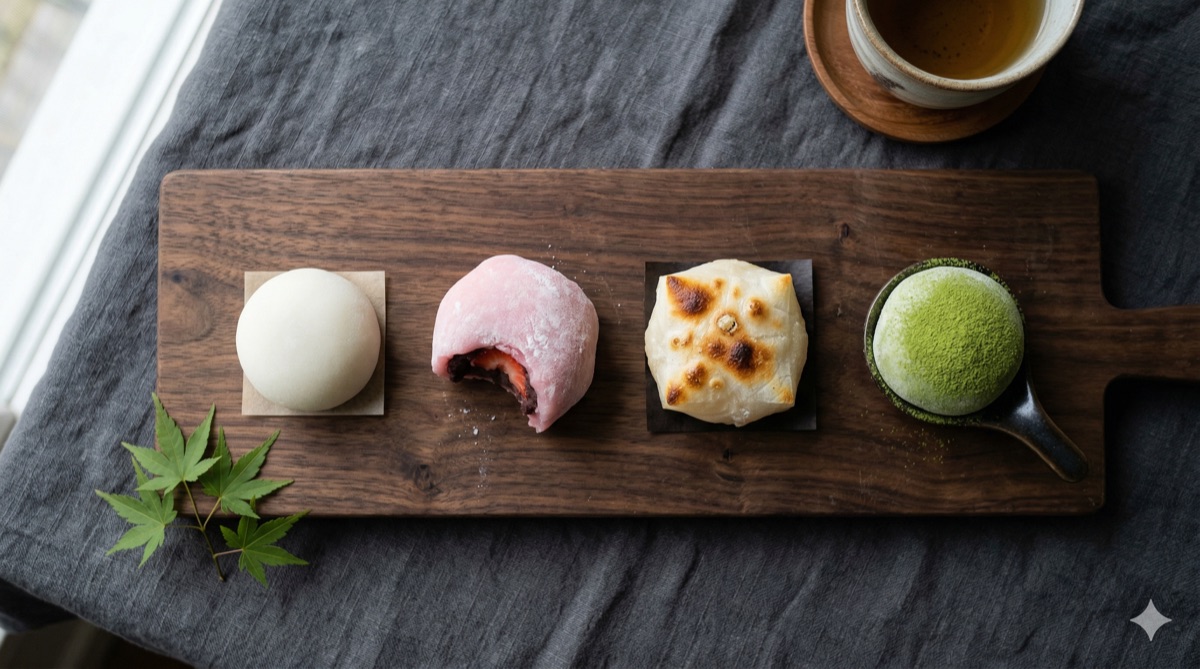
The types differ significantly in texture, form, and use. Knowing which you want before you shop saves confusion:
Kirimochi (切り餅) — the cooking workhorse
Rectangular or round dried mochi blocks sold in vacuum packs. Grill at 200°C for 8–10 minutes until puffed and lightly charred, or simmer in soup for 3–4 minutes until softened. Shelf-stable, inexpensive (roughly $5–8 for a 1 kg pack), and the most practical form for home cooking. Available at all Asian grocery stores and online.
Daifuku (大福) — soft mochi with filling
A round of soft, freshly made mochi (roughly 40–50 g) wrapped around anko (sweet red bean paste). Ichigo daifuku adds a whole strawberry inside the anko; nama daifuku uses fresh cream filling. Daifuku is a fresh confection — best eaten the day it is made, as the mochi skin hardens within 24 hours. Sold at Japanese bakeries and confectionery shops.
Yaki mochi (焼き餅) — grilled plain mochi
Kirimochi grilled until the surface blisters and puffs, the interior turns soft and stretchy, and a slight char develops on the outside. Eaten with a strip of nori and a dip of soy sauce (isobe maki), or plain with a brush of sweet soy glaze. The simplest and most satisfying way to eat mochi at home.
Ozoni mochi — New Year soup mochi
Plain white mochi simmered in dashi-based broth for the New Year dish ozoni. Regional styles differ: Kanto uses clear dashi broth with square mochi; Kansai uses white miso broth with round mochi. The mochi is not the flavour driver — it adds body and texture to the soup.
Kusa mochi (草餅) — mugwort mochi
Mochi made with ground mugwort (yomogi) mixed into the pounded rice. The result is pale green with a slightly bitter, earthy flavour. A spring seasonal product, most common around the Hina Matsuri (Girls’ Day) festival in March.
Kashiwa mochi (柏餅) — May festival mochi
Soft white mochi filled with anko or miso-flavoured anko, wrapped in a dried oak leaf. A seasonal confection eaten at Children’s Day (May 5). The leaf is not eaten — it is ceremonial.
Warabi mochi — not rice mochi
Despite the name, warabi mochi is made from bracken (warabi) starch, not rice. It is translucent, jelly-like, and dusted with kinako (roasted soybean flour). Completely different product from rice-based mochi — the name is historical, not descriptive. Worth including here because Western readers frequently confuse the two.
Mochi vs Mochi Ice Cream
This is the most common point of confusion for Western audiences. Mochi ice cream is a real product — and a good one — but it is not representative of traditional mochi.
Mochi ice cream was invented by Frances Hashimoto in Los Angeles in 1994 and commercialised by her company Mikawaya. The product was designed for the Western market: a thin, highly pliable mochi skin (roughly 1–2 mm) kept soft even when frozen, wrapped around a ball of ice cream. The skin must remain flexible at freezer temperatures, which requires specific starch modifications not used in traditional mochi-making.
Traditional daifuku mochi has a skin roughly 4–6 mm thick with a substantial, springy chew. Kirimochi is even denser. Neither is anything like the thin wrapper of a mochi ice cream ball. If mochi ice cream is your only reference point, everything else about mochi will feel unexpected — thicker, chewier, more assertively textured.
How to Cook with Mochi at Home
Grilled mochi with nori and soy sauce (isobe maki)
Place kirimochi on a wire rack under a broiler or in a toaster oven. Grill 4–5 minutes per side at 200°C until the surface is golden-brown and puffed, with the interior soft and stretchy. Wrap each piece in a strip of nori, dip in soy sauce. This is the simplest and most common mochi preparation.
Ozoni (New Year soup)
Add kirimochi to dashi-based broth. Simmer for 3–4 minutes until the mochi is soft and puffy but not dissolving. Kanto-style: clear dashi, chicken, mitsuba. Kansai-style: white miso broth, taro, daikon.
Zenzai (sweet azuki soup)
Cook 150 g dried azuki beans with 50 g sugar until soft (roughly 60–90 minutes), adjusting sweetness to taste. Add 1–2 pieces of grilled kirimochi per serving. The mochi absorbs the sweet broth and provides a chewy contrast to the soft beans.
Kinako mochi (soybean flour mochi)
Microwave kirimochi in a bowl with a splash of water for 30–40 seconds until soft. Toss in kinako (roasted soybean flour) mixed with sugar at a ratio of 3 tbsp kinako to 1 tbsp sugar. A fast snack or dessert that takes under 2 minutes total.
How to Make Simple Mochi at Home
This produces shiratama-style soft mochi balls — not pounded kirimochi, but the same starch and a very similar soft-chewy texture. No special equipment needed.
- Mix: 100 g shiratamako (sweet rice flour) + 80 ml water + 1 tbsp sugar. Stir until smooth — the dough should be roughly the consistency of an earlobe.
- Microwave: cover loosely with plastic wrap. Microwave on high for 2 minutes. Stir vigorously. Microwave 1 more minute until the dough turns from white to slightly translucent and pulls away from the sides of the bowl.
- Shape: dust your hands generously with katakuriko (potato starch) or cornstarch. Pinch off pieces and roll into balls (roughly 15 g each). The starch dusting prevents sticking and gives the finished shiratama a smooth surface.
- Serve immediately — these harden within 1–2 hours. Drop into zenzai, roll in kinako, or eat plain.
For the flour: Shop shiratamako (sweet rice flour) on Amazon →
Note: shiratamako and mochiko (Bob’s Red Mill Mochi Flour) are both made from mochigome and produce similar results for this method. Shiratamako is ground from whole dried mochigome; mochiko is ground from soaked and dried mochigome. Either works here.
Mochi Nutrition: Calories, Carbs, and What to Expect
Mochi is essentially concentrated rice starch, so the nutritional profile is carbohydrate-heavy with minimal fat or protein. One standard piece of plain mochi (about 50g) contains roughly:
Nutrition per piece (~35 g plain mochi)
Calories
Carbs
Protein
Fat
A 50 g piece runs 110–120 kcal. Daifuku adds ~30–50 kcal from anko; mochi ice cream adds ~80–120 kcal from the ice cream centre.
Daifuku adds 30–50 kcal from the anko filling. Mochi ice cream adds 80–120 kcal from the ice cream centre. Kinako mochi adds about 25 kcal from the roasted soybean flour coating. Mochi is gluten-free (glutinous rice contains no gluten despite the name) — the “glutinous” label refers to the sticky, glue-like texture, not to the protein gluten.
Modern Mochi Trends
Mochi donuts — ring-shaped fried dough made with mochiko flour for a chewy, QQ texture — became a global trend starting around 2020, driven by chains like Mochidoki and Mochinut. The mochiko in the batter gives the donut a chewier, bouncier bite than standard wheat donuts. Other modern applications include mochi waffles (mochiko batter in a waffle iron), mochi pancakes, and mochi brownies — all exploiting the same amylopectin elasticity in a Western format.
Where to Buy Mochi
- Fresh daifuku: Japanese bakeries and Japanese grocery stores (Mitsuwa, Nijiya, H Mart). 1–2 day shelf life — eat the day of purchase.
- Kirimochi (packaged blocks): Asian grocery stores and online. Shiratamako brand and Ito-en are reliable. 6–12 month shelf life at room temperature. The most practical option for cooking.
- Mochi flour (for making at home): shiratamako or mochiko at Asian grocery stores and online. Bob’s Red Mill Mochi Flour is widely available at mainstream grocery stores in the US.
- Mochi ice cream: Bubbies and My/Mo brands are stocked at most mainstream grocery stores in the US and Canada. Good product, but see the clarification above on what it is and is not.
Mochi vs Mochigome: Product vs Grain
Mochi is the finished product — pounded rice cake. Mochigome (glutinous rice / mochi rice) is the raw grain. The relationship is like bread and flour: you need mochigome to make mochi, but mochigome is also used for other dishes that are not mochi — sekihan (red rice with azuki beans), ohagi (rice balls coated in anko), and sticky rice dishes across East and Southeast Asia.
If you want to cook with the raw grain rather than the finished product, see What Is Mochi Rice.
Frequently Asked Questions
- What is mochi?
- Mochi (餅) is a Japanese rice cake made by steaming mochigome (glutinous rice, also called sweet rice) and pounding it until it becomes smooth, elastic, and stretchy. The defining characteristic is texture — dense chew that stretches and resists before releasing — not flavour. Plain mochi tastes mildly sweet and neutral; the appeal is entirely in the elastic bite. It is eaten as a confection (daifuku), grilled as a snack (yaki mochi), added to soups (ozoni), and used as an ingredient in hot pot.
- What does mochi taste like?
- Plain mochi has a mild, slightly sweet, neutral rice flavour. The appeal is texture, not taste — it is chewy, elastic, and stretchy in a way no Western food replicates. Flavoured mochi (daifuku, kinako mochi) gets its character from the filling or coating, not the mochi itself. Think of it like fresh pasta: neutral in flavour, defined entirely by its texture and what surrounds it.
- Is mochi the same as mochi ice cream?
- No. Mochi ice cream is a commercial product invented by Frances Hashimoto in Los Angeles in 1994 — it uses a thin, highly pliable mochi skin wrapped around a ball of ice cream. The skin is designed to stay soft when frozen, which requires a much thinner and more processed version of traditional mochi. Real daifuku mochi is roughly 4–6mm thick with a substantial chew; mochi ice cream skin is closer to 1–2mm and serves as a wrapper. Both are enjoyable products, but they are not the same thing.
- What is mochi made of?
- Traditional mochi is made from mochigome (Oryza sativa var. glutinosa) — glutinous rice — and water only. Mochigome contains nearly 100% amylopectin (compared to ~80% in regular rice), which is why it becomes sticky and elastic when pounded. The word 'glutinous' refers to the glue-like sticky texture, not to gluten protein — mochi is gluten-free. Commercial mochi products may include sugar, cornstarch (as a dusting), and fillings like anko (sweet red bean paste).
- Why does mochi get hard?
- Mochi hardens through retrogradation — the amylopectin molecules in the rice starch slowly realign and crystallise as they cool, expelling water and firming the texture. At room temperature, fresh mochi hardens within a few hours. Refrigeration accelerates hardening significantly. This is why kirimochi (commercial dried mochi blocks) is sold vacuum-sealed and shelf-stable — it has already been dried to a firm state. To reverse hardening: grill kirimochi at 200°C for 8–10 minutes until puffed, or simmer in soup for 3–4 minutes.
- Is mochi gluten-free?
- Pure mochi made from mochigome (glutinous rice) and water is gluten-free. The word 'glutinous' refers to the sticky texture, not to gluten protein — mochigome contains no wheat, barley, or rye. However, commercial mochi products may include wheat-based ingredients — check labels. Soy sauce served alongside grilled mochi typically contains wheat unless you use tamari.
- How do you eat mochi?
- It depends on the form. Fresh daifuku: eat at room temperature the day it is made — the mochi hardens within 24 hours. Kirimochi (dried blocks): grill at 200°C for 8–10 minutes until puffed and lightly charred, then wrap in nori and dip in soy sauce; or simmer in soup for 3–4 minutes. Kinako mochi: microwave kirimochi in a bowl with a splash of water for 30 seconds, then toss in 3 tbsp kinako (roasted soybean flour) mixed with 1 tbsp sugar. Always cut mochi into small pieces — see safety note below.
- Is mochi safe to eat?
- Mochi is safe when eaten carefully, but it is the most common food-related choking hazard in Japan. Its sticky, elastic texture can adhere to the throat and block the airway if swallowed in large pieces. Japanese fire departments report a spike in choking emergencies every New Year, when mochi consumption peaks. Safety rules: always cut mochi into small pieces before eating; chew thoroughly before swallowing; do not eat a whole piece of mochi in one bite. Children under 3 and elderly adults are at highest risk.
Where to Go Next
- Make it at home: Homemade Mochi Recipe — microwave method, 15 minutes, 3 ingredients
- The grain mochi is made from: What Is Mochi Rice — mochigome (glutinous rice), how it differs from regular rice, and how to cook it
- The rice hub: Rice — all rice types, varieties, and cooking guides
- The ingredient context: Japanese Pantry — how mochi fits into the broader Japanese ingredient system
- A seasonal mochi flavour: What Is Yuzu — the citrus used in yuzu mochi and yuzu daifuku
- Fermented rice techniques: How to Ferment Rice — adjacent rice transformation methods
- Mochi as an ingredient: Recipes — dishes that use mochi, including ozoni, zenzai, and grilled mochi preparations
- Brown rice for context: What Is Genmai — how brown rice differs from glutinous rice in nutrition and cooking
- Need a mochi alternative? mochi substitutes — alternatives for texture and stickiness
- Browse all guides: Guides Hub
- Japan National Tourism Org — Food Guide — mochi in the context of Japanese food culture
- USDA FoodData Central — Rice flour, glutinous — nutritional reference for mochiko / mochigome
This page contains affiliate links. If you purchase through these links, we may earn a small commission at no extra cost to you. Last updated: March 2026.